
From Patient to Catalyst
I hadn’t initially sought to build a movement around Peyronie’s disease. I simply wanted to understand what had happened to me. When I was diagnosed, I assumed there would be:
A clear, integrated pathway of trusted information
Experienced clinicians readily available
Practical guidance
Somewhere to make sense of what came next
Instead, I found a fragmented landscape.
The diagnosis was not the hardest part. Everything before and after it was.
Different opinions. Conflicting advice. Long waiting lists. Almost no conversation about what this disease does to a man’s life.
After much searching, I received treatment at Mayo Clinic, which gave me more than exceptional care. It gave me perspective. Once treatment was complete, I found myself asking a different question.
If this was my experience, what must it be like for everyone else?
That question changed the direction of my life. I began speaking with men living with Peyronie’s disease around the world. I interviewed leading surgeons, urologists, and clinicians. I explored the research, the treatment pathways, the education, and the patient experience.
Every conversation was different. The conclusion was the same; There is extraordinary expertise, but no connected pathway.
I realized this is bigger than a clinical conversation.
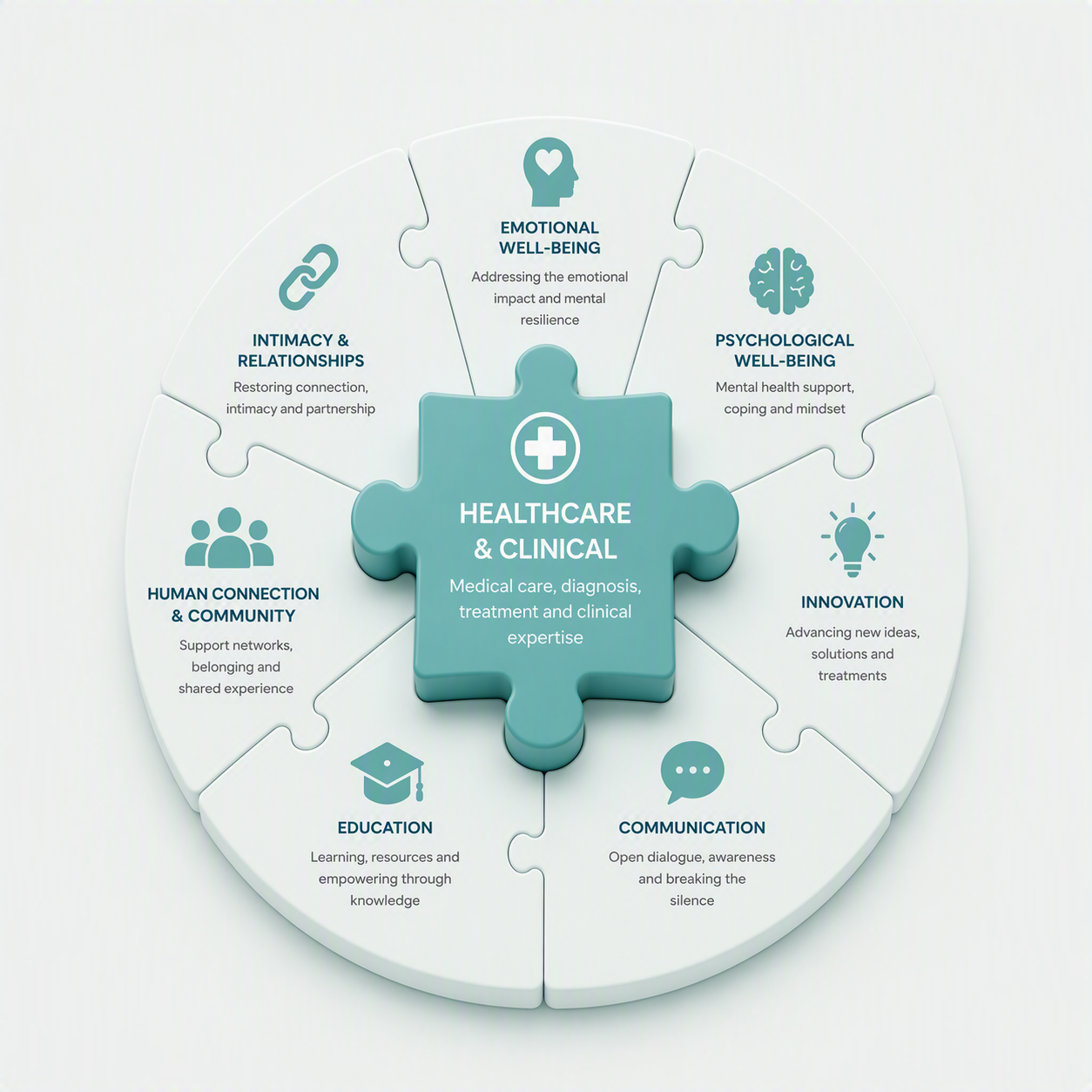
Across conversations with urologists, patients, and the 50+ men who responded to a survey we sent out, the same pattern kept surfacing: The physical disease is only the visible piece. Clinics are at capacity. Clinicians have the tools to treat the disease, but not the time — and often not the training to address what happens around it:
The emotional weight
The psychological toll
The strain on intimacy and relationships
Men and their partners are navigating all of this largely alone, because the system was never built to hold it.
That’s the piece people don’t expect. If you pictured this as a jigsaw puzzle, the clinical piece is the one that’s always in focus — sharp, prominent, easy to see. The rest of the pieces are just as real, but they stay grayed out, out of frame, rarely discussed.
This is why the movement isn’t a healthcare platform. It’s an invitation to build something wider — for funders, philanthropists, and investors who care about innovation, education, and human connection as much as clinical outcomes. Support the piece you can see, and you’re funding treatment. Support the whole picture, and you’re funding a different way of navigating a disease that’s never just been physical.

The future of Peyronie’s disease will not be built by one person. It will be built by a movement.
My diagnosis gave me the reason to start asking questions. My background gave me the tools to think differently about the answers. The PD Movement brings those worlds together; not to replace the outstanding work already happening, but to connect it. Strengthen it. And help build the infrastructure this disease has never had.
The PD Movement is bringing together patients, clinicians, researchers, educators, innovators, and partners around one shared belief: Men deserve better.
Better education. Better conversations. Better support. Better patient experiences. Better outcomes.
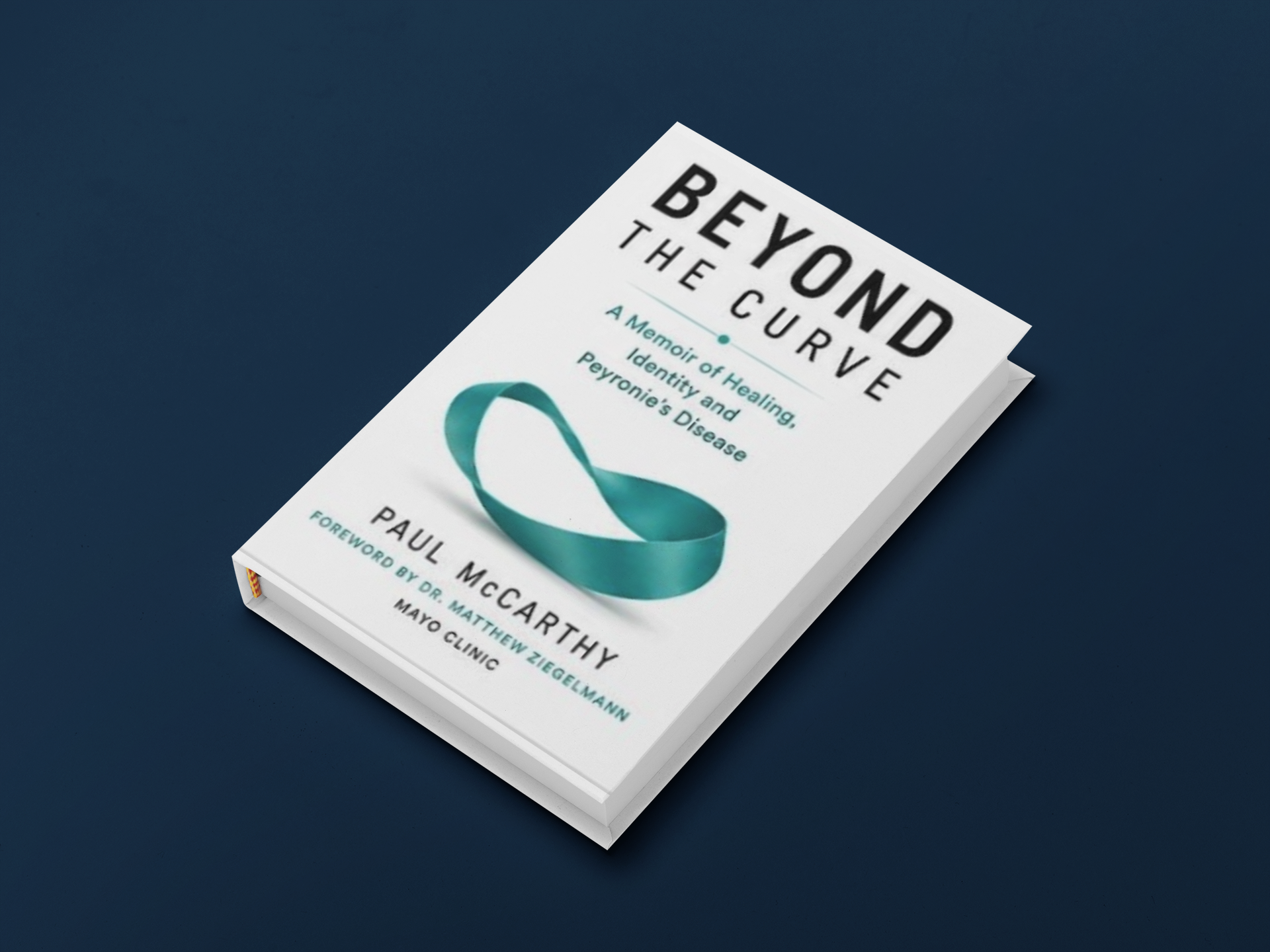
Beyond the Curve: A Memoir of Healing, Identity and Peyronie’s Disease
The Story Behind the Movement
Following my treatment for Peyronie’s disease at Mayo Clinic, I realized something that would ultimately change the direction of my work. Millions of men were living with this disease, yet almost nobody was talking about it — and the education, support, and infrastructure they needed simply did not exist.
That realization led me to write Beyond the Curve: A Memoir of Healing, Identity and Peyronie’s Disease — an ambitious, first-of-its-kind exploration of the complete Peyronie’s disease journey, from diagnosis and treatment through recovery, identity, intimacy, relationships, and life beyond the disease.
But the memoir was never intended to be the end point. It became the catalyst for something much bigger: The PD Movement.
Beyond the Curve is more than my personal story. It gives voice to an experience that has remained largely invisible. Alongside it sits the Peyronie’s Disease Pocket Guide — a practical, clinician-informed resource designed to help patients and partners better understand the disease, navigate treatment, support recovery, and rebuild confidence.
Together, these publications form part of a much larger ambition: to build the missing education, navigation, and support infrastructure around Peyronie’s disease — connecting lived experience, clinical expertise, education, research, and community.
Because changing the future of Peyronie’s disease requires more than telling my story. It requires building what has been missing.